

The United Arab Emirates launched passenger rail services between Dubai and Abu Dhabi on September 30, with fares starting at AED39 (€9) and journey times of around one hour between the two emirates.
The opening brings Etihad Rail’s passenger network to Dubai three months after the first service began between Abu Dhabi and Fujairah. Dubai’s Al Yalayis Station is directly connected by pedestrian bridge to Jumeirah Golf Estates Metro Station, allowing passengers to transfer onto the emirate’s public transport network.
Dubai-Abu Dhabi fares start at AED39 in Comfort Class and AED109 in Premium Class. Etihad Rail is operating 10 daily passenger services between the two cities, according to information released at the launch.
Passenger rail reaches Dubai
The Dubai opening marks the second stage in the rollout of the UAE’s national passenger rail network.
On June 30, Etihad Rail carried its first paying passengers between Fujairah on the east coast and Mohamed bin Zayed City Station in Abu Dhabi. The journey takes about one hour and 45 minutes, and more than 10,000 tickets had been sold before services began.
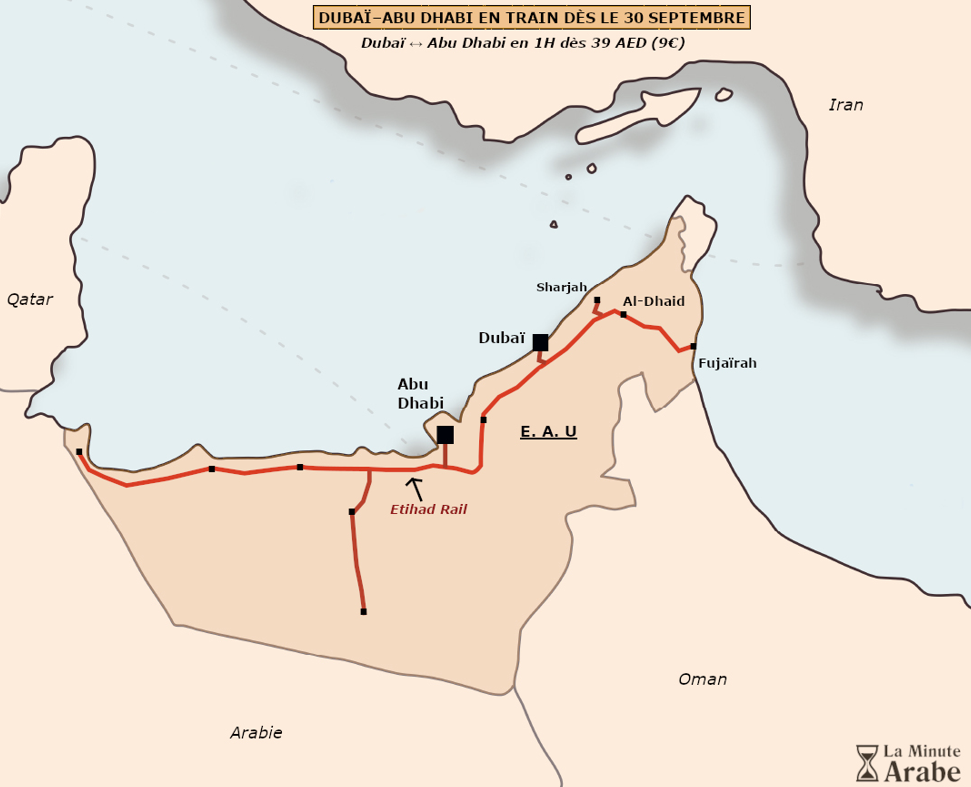
Since September 30, the passenger network has expanded to include Abu Dhabi, Dubai, Fujairah and Al Dhaid. More stations are due to open across Al Dhafra before services reach Sharjah in March 2027.
The trains can travel at speeds of up to 200 km/h and carry as many as 400 passengers.
In Dubai, integration with the Metro is one of the main features of the new station. A dedicated pedestrian bridge links Al Yalayis with Jumeirah Golf Estates Metro Station, while integration with the Nol system allows passengers to combine national rail journeys with Dubai’s Metro, tram and bus services.
UAE president travels by train ahead of launch
Two days before the service opened, UAE President Sheikh Mohamed bin Zayed Al Nahyan travelled by Etihad Rail from Abu Dhabi to Dubai.
His journey preceded the inauguration of Dubai Station, attended by senior officials including Dubai Crown Prince Sheikh Hamdan bin Mohammed and Etihad Rail chairman Sheikh Theyab bin Mohamed bin Zayed.
The railway gives passengers a new alternative for travel between the UAE’s two largest urban and economic centres, a journey that has until now been overwhelmingly road-based.
The number of vehicles on UAE roads has been growing by more than 8% a year, compared with a global average of around 2%, Energy and Infrastructure Minister Suhail Al Mazrouei said in late 2025. The federal government is also pursuing a national programme to tackle congestion and expand capacity on major roads.
The UAE recorded 853,411 new vehicle registrations in 2025, up from 779,276 a year earlier.
Etihad Rail therefore adds a scheduled intercity rail option to one of the country’s busiest transport corridors. The passenger network will continue expanding through 2027 and is ultimately expected to connect 11 cities and regions across the UAE.