

Saudi Aramco is in talks with several Western banks, including Citibank, to finance an expansion of the East-West Pipeline, which carries Saudi crude to Yanbu on the Red Sea without passing through the Strait of Hormuz.
The talks have slowed over how to allocate the additional costs linked to war risk, Intelligence Online, a French publication specializing in economic intelligence and geopolitics, reported on September 9.
Up to 7 million barrels per day
Built in the early 1980s, the East-West Pipeline connects oil facilities in eastern Saudi Arabia with Yanbu. It can carry up to 7 million barrels per day, including around 5 million b/d that can be exported from the Red Sea coast.
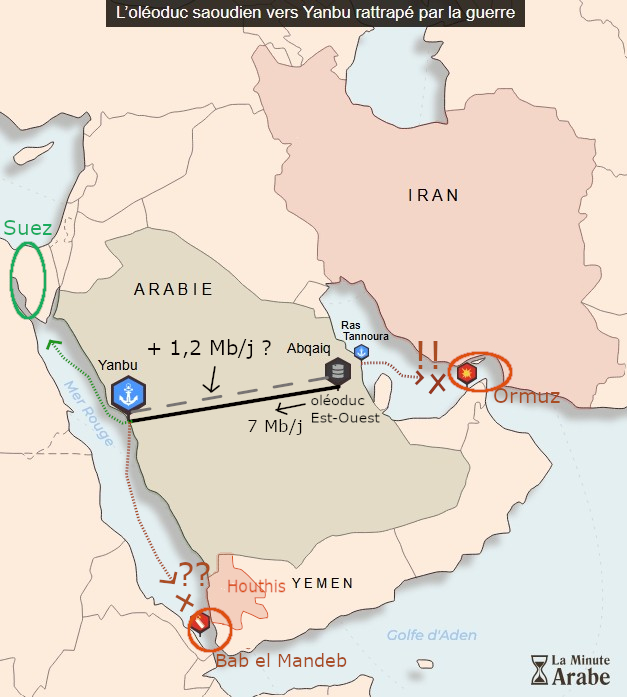
Riyadh has been considering since July an increase of 1 to 2 million b/d in capacity. The project could require several billion dollars and years of work, while the final technical configuration has yet to be decided.
Since the war with Iran began disrupting shipping through Hormuz, the pipeline has allowed Saudi Arabia to send a larger share of its crude to the Red Sea.
Houthis move closer to Bab el-Mandeb
That route is also becoming more exposed. The Iran-backed Houthis have seized the Yemeni port of Mocha and reached the Hanish Islands near Bab el-Mandeb, Reuters reported on September 10.
The group says international shipping will remain open, except to Saudi vessels, which remain subject to its naval blockade.
Bab el-Mandeb is the main gateway to the Indian Ocean for cargoes leaving Yanbu for Asia. Growing pressure around the strait therefore adds another risk to the route Saudi Arabia is relying on to reduce its exposure to Hormuz.