




Saudi Arabia is rallying its military partners as Houthi attacks on the kingdom intensify. Syria is already providing military advisers, according to Reuters, while thousands of Sudanese troops have reportedly been deployed to Saudi Arabia and Yemen, according to reports published on Monday, November 23, that have been partially denied.
On Tuesday, November 24, the Houthis struck Riyadh’s tallest skyscraper, home to the Saudi sovereign wealth fund, for a second time, wounding 11 people, according to the kingdom’s civil defence authorities. In Yemen, the rebels have advanced to within some 60 kilometres of Aden, the interim capital of the internationally recognised government, according to Yemen’s military, which insists it can defend the city.
Eleven years after launching its military intervention in Yemen, Saudi Arabia is drawing on support from partners stretching from North Africa to South Asia.
Military support from Syria and Sudan
Sudanese news outlet Darfur24 reported on November 23 that more than 7,000 Sudanese troops had been sent to Saudi Arabia and Yemen in recent months, including some 2,000 members of the Sudan Shield Forces.
The group’s commander, Abu Aqla Keikel, had announced plans to deploy several battalions abroad without specifying their destination, according to Sudan Tribune. The group subsequently denied that any decision had been made to deploy its battalions to Saudi Arabia or Yemen.
Sudan previously took part in the Saudi-led military coalition in Yemen from 2015, long before its own civil war erupted in April 2023.
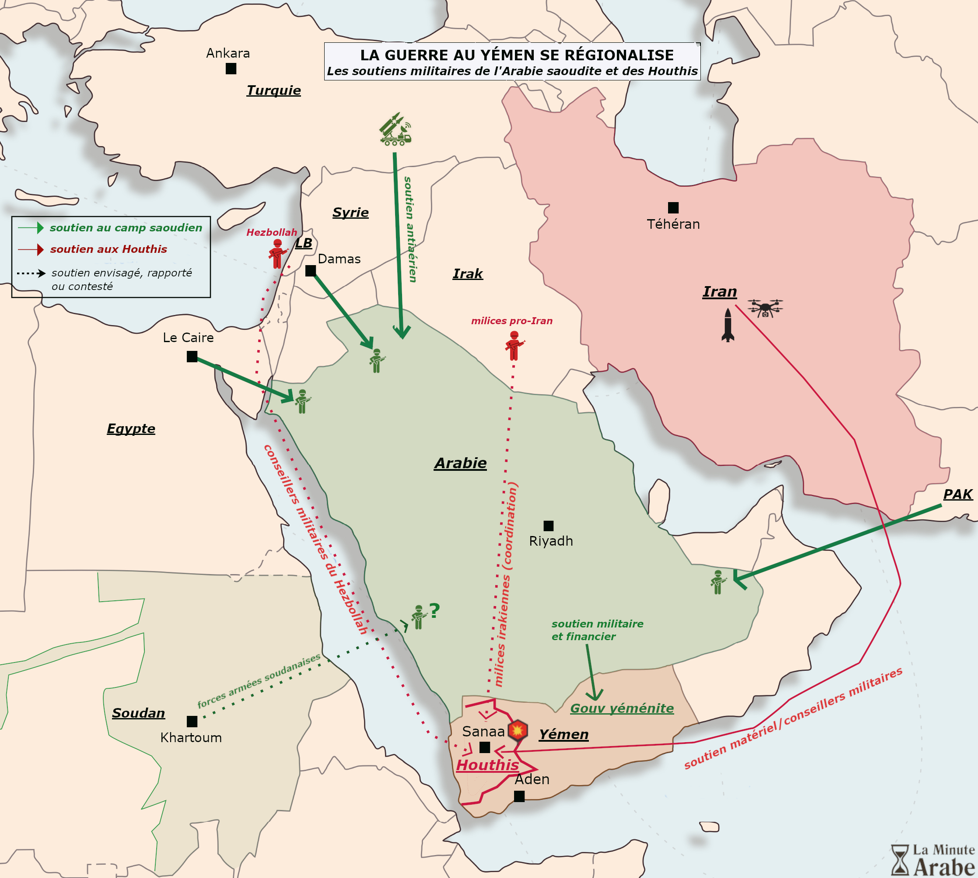
Saudi Arabia is also receiving assistance from Syria under President Ahmed al-Sharaa. On November 6, Reuters cited two Syrian military sources and a senior US official as saying that Damascus had sent a limited number of military personnel to the kingdom to advise and train Saudi and Yemeni forces.
Syrian authorities have, however, denied any plans to send troops to Yemen. Many former rebels now serving in Syria’s armed forces fought Lebanon’s Hezbollah and Iran-backed militias during the war against Bashar al-Assad.
Turkey, Pakistan and Egypt back Riyadh
In early October, Saudi Arabia, Turkey and Pakistan agreed to implement the collective defence commitments set out in their trilateral military agreement, signed in August.
Ankara is providing mainly technical and defensive assistance to the kingdom, according to Reuters. Turkish Foreign Minister Hakan Fidan has, however, ruled out Turkish involvement in offensive operations.
Pakistan had already deployed 8,000 troops, fighter jets and an air defence system to Saudi Arabia in the spring of 2026 under its earlier bilateral defence pact with Riyadh, Reuters reported.
On October 26, Egypt’s parliament also authorised President Abdel Fattah al-Sisi to take the necessary measures to help defend the kingdom.
Iran and Hezbollah accused of military involvement in Yemen
Yemen’s government renewed its accusations against Tehran on November 20, alleging that the Houthis were using facilities at the port of Hodeidah to receive smuggled Iranian weapons.
Earlier in November, Yemeni authorities claimed that 21 foreign military specialists, including 14 members of Iran’s Islamic Revolutionary Guard Corps and seven from Lebanon’s Hezbollah, were involved in Houthi operations. Both Tehran and Hezbollah denied the allegations.
Reuters also reported in July that the Houthis were coordinating militarily with Iran-aligned Iraqi armed groups, citing regional officials.
Despite Saudi Arabia’s military efforts and the support of its partners, a swift end to the fighting appears increasingly unlikely. According to two Western officials cited by Reuters on November 18, the kingdom is preparing for a conflict that could last well into 2027.