

Saudi Aramco is examining several options for a gas surplus that could reach 50 billion cubic metres a year by 2030, including possible exports in the form of liquefied natural gas (LNG), the Financial Times reported this week.
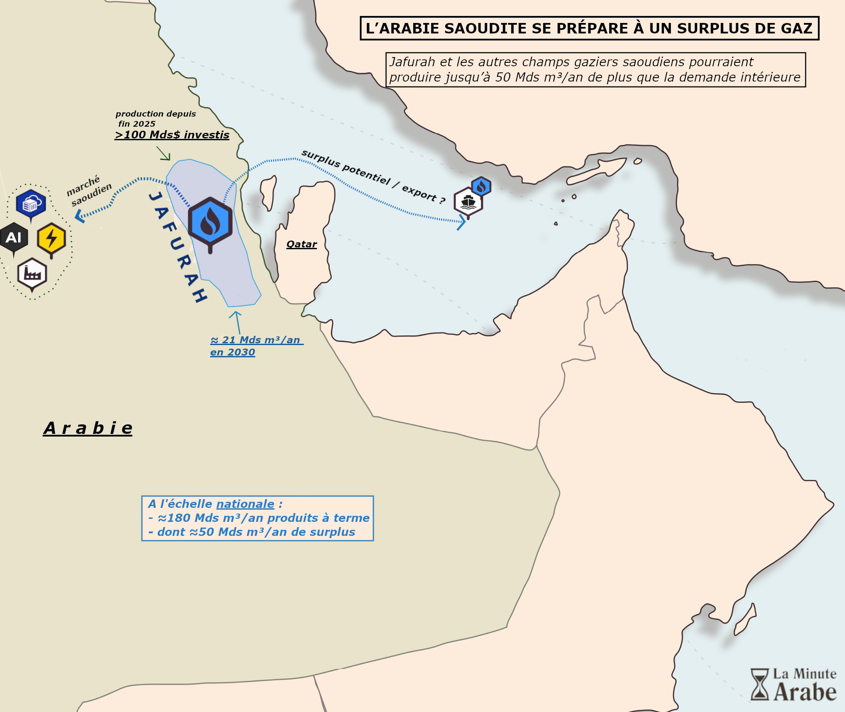
According to Wood Mackenzie, cited by the British newspaper, the sharp increase in Saudi gas production could lift supply to around 180 billion cubic metres a year, more than the kingdom’s power plants, industries and other new consumers may be able to absorb. Jafurah, a vast shale gas field in eastern Saudi Arabia, is expected to provide a large share of that growth.
Aramco plans to increase its sales gas production capacity by around 80% by 2030 compared with 2021. The state-controlled group is now considering what to do with volumes that could remain available after domestic demand is met.
More than $100 billion for Jafurah
Jafurah covers around 17,000 square kilometres and contains an estimated 229 trillion cubic feet of raw gas, according to Aramco. The company expects to invest more than $100 billion over the lifetime of the project.
Production began in December 2025 and is expected to gradually reach two billion cubic feet per day of sales gas by 2030, alongside ethane, condensates and other hydrocarbon liquids.
Jafurah is being developed using techniques similar to those used in the US shale gas industry, including horizontal drilling and hydraulic fracturing.
Replacing oil burned for power
Much of the additional gas will initially be consumed inside Saudi Arabia.
The kingdom still burns oil to generate electricity. Aramco estimates that developing its gas resources could replace the equivalent of around 500,000 barrels of crude oil per day currently used for power generation. That oil could instead be refined or exported.
The gas will also supply the petrochemical industry, factories and new sources of demand, including data centres.
A possible Saudi LNG industry
If domestic demand does not absorb all the new supply, Aramco could look for customers abroad.
The Financial Times reported that exporting the gas as LNG is among the options under consideration. The gas would have to be cooled to around minus 162°C, turning it into a liquid that can be loaded onto LNG carriers, which would require new infrastructure in Saudi Arabia.
Aramco is already expanding its LNG business abroad, particularly in the United States, but the kingdom’s gas expansion has so far been primarily aimed at the domestic market.
The company is also preparing to reorganise its operations by creating a standalone gas division, according to Reuters. The unit could eventually bring in minority investors or be listed separately.