

The United Arab Emirates will strengthen its east coast ports, oil pipelines and rail network to secure alternative routes for energy exports and trade, presidential adviser Anwar Gargash said on Monday, September 7, at the Hili Forum in Abu Dhabi.
“Our energy exports will not be held hostage, nor will our trade and economic activity,” he said. Two days later, Reuters reported the largest wave of attacks on shipping since the war began, including one that killed a seafarer off Dubai.
Fujairah, an oil outlet on the Gulf of Oman
The UAE already operates the Habshan-Fujairah pipeline, which carries crude from Abu Dhabi to Fujairah on the Gulf of Oman without passing through the Strait of Hormuz.
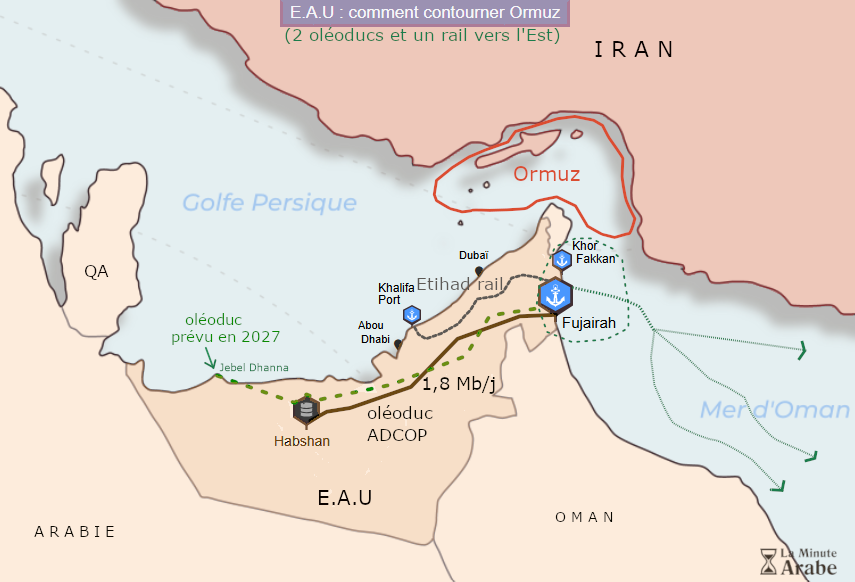
Its capacity reaches 1.8 million barrels per day, allowing part of the UAE’s crude exports to be loaded directly from the country’s east coast.
ADNOC is also building a second pipeline from Jebel Dhanna to Fujairah, via Habshan and Sweihan. The roughly 520-kilometre line is due to enter service in 2027 and double crude export capacity through Fujairah.
Rail for cargo
The bypass also extends to freight. Etihad Rail connects the country’s main ports and industrial zones with Fujairah and Khor Fakkan on the east coast.
A bonded rail corridor between Khalifa Port in Abu Dhabi and Fujairah Terminals was launched in 2025 to carry transit, export and domestic cargo across the UAE by rail.
The UAE therefore has overland links connecting the Gulf directly to the Gulf of Oman. Along with Saudi Arabia, it is one of only two Gulf oil producers with an existing pipeline capable of exporting crude outside the Strait of Hormuz.